Our Structural Engineering Services
Shades Structural Design
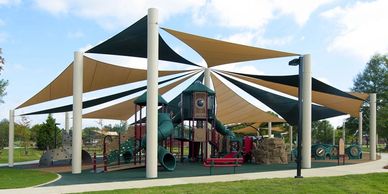
We provide structural engineering services for custom shade structures, including fabric shade systems, tensioned membrane structures, and rigid-frame shade assemblies. Our experience includes cantilevered shades, multi-post configurations, hip and pyramid-style shades, and architecturally exposed steel or aluminum framing.
Our services include structural analysis, finite element modeling, engineering calculations, and construction-ready structural drawings. We evaluate fabric tensioning behavior, connection forces, and load transfer paths, and perform tunneling and local stress analysis where required by complex shapes or constrained geometries. Our designs cover member sizing, foundations and footings, minimum embedment verification, and detailed connection design including base plates, anchor systems, splices, and bolted or welded joints to meet applicable codes and project requirements.
Wall-Mounted Structures & Architectural Attachments

We provide structural engineering services for wall-mounted and building-attached systems, including architectural canopies, blade signs, projecting signs, wall-supported shade elements, light fixtures, equipment supports, façade-mounted frames, and specialty architectural features requiring engineered attachment to the building structure. Our work includes elements mounted to exterior and interior walls, as well as components integrated with adjacent canopies or structural framing where load transfer, deflection control, and long-term performance are critical.
Our engineering services include gravity, wind, and seismic analysis, load-path evaluation, finite element analysis for complex or nonstandard configurations. We prepare engineering calculations and construction-ready structural drawings, and design attachment and connection details for a wide range of materials and substrates, including concrete, CMU, brick masonry, steel framing, metal decking, blocking, and stud-supported wall systems. Connection designs include anchor systems, embeds, fasteners, and welded or bolted assemblies tailored to project-specific conditions.
Wind, Seismic & Reaction Analysis
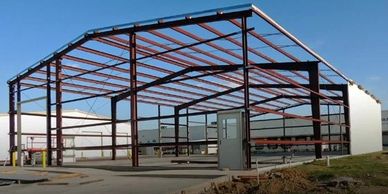
We provide advanced wind, seismic, reaction, and connection analysis services for conventional and non-conventional structures in accordance with ASCE 7, IBC, ASTM standards, and applicable local building codes. Our scope includes analytical wind and seismic force determination for complex geometries, irregular shapes, lightweight systems, and structures that fall outside prescriptive code guidance. Where simplified code procedures are not applicable, we perform rational analysis and wind tunnel–based evaluation methodologies, including applications for fabric membrane structures, suspended architectural elements, signage systems, canopies, and other aerodynamically sensitive or atypically shaped structures.
Our services include detailed analysis and design of a wide range of structural connections, including bolted, welded, post-installed, cast-in-place, clamped, and proprietary anchorage systems. We evaluate suspenders, cables, rods, hangers, braces, and secondary steel framing, determining axial, shear, and moment demands at attachment points to buildings or primary structural systems. Using finite element analysis (FEA) and 3D structural modeling, we assess global behavior, load redistribution, and connection stiffness effects. Deliverables include reaction forces at base plates, anchorage and embedment demands, gusset plates, connection hardware sizing, and foundation interface forces for prefabricated metal buildings, retrofit conditions, and new structural systems. All analyses are documented in engineer-sealed calculation packages and supported by construction-ready drawings detailing connection geometry, load paths, and installation requirements.
Tenant Improvement & Equipment Anchorage
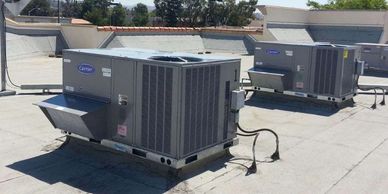
We provide structural engineering services for tenant improvement projects involving modifications to existing roof framing and structural systems. Our experience includes reinforcement of roof framing systems such as open-web steel joists, wood joists, and structural framing supporting new or relocated equipment. We also design anchorage systems for HVAC and mechanical equipment, including rooftop units and similar assemblies, utilizing industry-recognized anchorage solutions such as Hilti, Simpson Strong-Tie, and comparable proprietary and non-proprietary systems.
Our services include analysis of seismic and wind loads acting on equipment and their supporting structures, evaluation of load transfer into existing roof systems, and verification of anchorage demands under governing load combinations. We prepare engineering calculations and construction-ready drawings for equipment anchorage and roof framing reinforcement, addressing installation on concrete roofs, steel joists with metal decking, wood joists, and conventional wood framing, in compliance with applicable codes and project requirements.
Foundations & Footing Design
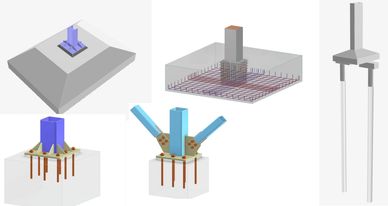
We provide structural engineering services for foundation systems supporting a wide range of installations, including prefabricated metal buildings, shade and canopy structures, solar panel support systems, light poles, sign structures, and other pole- or frame-supported assemblies. Our work includes the design of drilled caissons, pier foundations, spread footings, and embedded post systems tailored to the specific structural system and site conditions.
Our engineering process includes review of geotechnical reports, evaluation of soil parameters, and application of applicable building codes and design standards. We perform foundation analysis to determine required embedment depths, footing dimensions, and bearing capacities, optimizing designs for constructability and material efficiency while maintaining safety and code compliance. Engineering calculations and construction-ready foundation drawings are provided for permitting and construction.
Signs
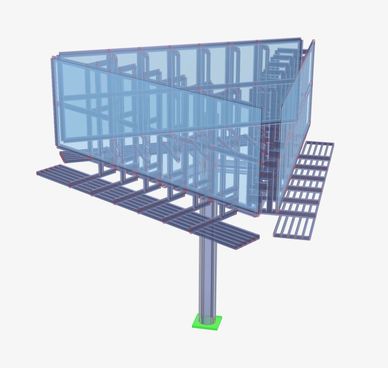
We provide comprehensive structural engineering services for a wide range of signage systems, including building-mounted signs, ladder signs attached to buildings, freestanding pylon signs, pipe pylon signs, and custom specialty sign structures. Our scope includes the complete structural design of pipes, tubes, sign frames, connections, support steel, caisson footings, and spread footings, tailored to each project’s architectural and site constraints.
Our services include review of geotechnical reports, evaluation of existing soil conditions, and compliance with applicable building codes, including local jurisdiction requirements, IBC, ASCE 7, and project-specific criteria. We perform detailed wind and seismic analyses to determine governing design forces and load combinations, and we design base plates, anchor rods, and post-installed anchorage systems as required. We also provide engineering for retrofits, remodels, and modifications of existing signs, including changes in sign dimensions, configuration, or loading demands.
From a technical standpoint, we develop complete structural calculation packages documenting wind and seismic loading, force transfer paths, member sizing, foundation design, and anchorage verification. Our construction documents include structural drawings with detailed steel framing layouts, connection details, footing and foundation details, base plates, anchor layouts, and installation notes, providing clear, construction-ready deliverables that meet code requirements and facilitate efficient permitting and construction.
MEP Trapeze, Strut Supports & Seismic Bracing (HVAC, Piping, Conduit)
MEP Trapeze, Strut Supports & Seismic Bracing (HVAC, Piping, Conduit)
MEP Trapeze, Strut Supports & Seismic Bracing (HVAC, Piping, Conduit)
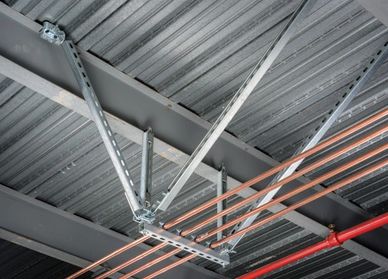
We provide structural engineering for MEP support systems including trapeze assemblies, Unistrut/strut-channel framing, threaded-rod hangers, equipment stands, and building anchorage for mechanical units within occupied facilities and industrial buildings. Our work includes gravity support design for ductwork, piping, cable tray, and conduit, as well as seismic restraint and bracing design to maintain life-safety performance and code compliance during seismic events. We design and verify supports and attachments using the governing provisions for nonstructural components (e.g., ASCE 7 Chapter 13), along with applicable IBC/local code amendments and industry guidance commonly used for MEP distribution bracing (e.g., SMACNA seismic restraint guidance for ducts/piping on trapeze).
Our deliverables include determination of seismic design forces, brace layout/spacing concepts, and load transfer to the structure through a diverse set of connection types such as cast-in-place anchors, post-installed anchors, clamp connections, rod/strut hardware, and proprietary modular support systems. We evaluate connection demands (tension, shear, combined interaction) at slab/beam/joist attachments, verify allowable capacities per manufacturer data when proprietary systems are used (e.g., modular support systems for multi-trade MEP installations), and provide clear reaction loads for coordination with the primary structural system. Final packages typically include engineer-sealed calculations and construction-ready drawings/details showing trapeze framing, bracing configuration, attachment requirements, and installation notes for field execution and permitting